
Lyceum Home Lyceum Library Education History
 

Click here for the PF Lyceum Site Index
Click here for Previous Blog
Click here for Complete Blog List


Common Ground By Andrea Fodor Litkei PF Lyceum Blog #31

My father, Dr. Nandor Fodor, devoted the better part of his lifetime for the missing answers that might give a more complete picture of the whole of man and the phenomena that occurred around him, and in connection with him. He did supply some of the answers, in his pioneering researches—but before I continue—one can talk about a man but not for him. So first, I would like to give you some of his own words as to give you a taste of his personality and outlook on these matters, before I go into the biographical fact and details of some of his researchers.

To quote him; “In a lifetime of adventure and research I would feel hard put to answer the question as to what has enthralled me most. It appears to me that in the wonders of the human mind no scale of comparison exists. Time, place and mental disposition are the decisive factors in fascination. There is enough to choose from for the most delicate taste. The reach is open from Heaven to Hell. Ample room exists for every kind of approach; the psychological, the philosophical, the psychoanalytical, the occult and the religious. I have no drums to beat, no isms to serve. Like Lewis Carroll’s child, ‘with pure, unclouded brow and gleaming eyes of wonder’ I sat before the unknown, sailed into it, for the best years of my life. I can truly say that my three score and ten years have been marvelously lit up by the excitement and unceasing wonder of this quest.” These words were written a few months before he died, three score and ten, in l964.

He set about this quest—“great adventure”—as he liked to call it through force of life circumstances, which resulted in putting him in a unique position within the two disciplines of parapsychology and psychoanalysis. Firstly, he was a lawyer—he received his doctorates, LLD and PhD, in philosophy, at the Royal Hungarian University of Science of Budapest in l917. He became a well-known journalist, and he as Director of the International Institute for Psychical Research, l935-l938, in London, a psychic researcher. Finally he became a respected psychoanalyst fully equipped to try a case—write about it—investigate it and analyze it according to each of his professions, the knowledge of which, he retained throughout a lifetime. It was a rare combination! Although psychoanalysis was the profession that finally claimed him, he never lost the insights which the other three had given him.

As a parapsychologist, he admitted to three paranormal cases that he would willingly take to court and defend as a lawyer. So when the Editor of Modern Mystic asked him to do so, he accepted the challenge and out of the many picked “The Pearl Tie-pin Case” reported by Professor William Barrett, Professor of Physics, Royal College of Science, Dublin, in his book The Threshold of the Unseen the case supported by Sir Oliver Lodge, world-famous physicist: “The Hugh Lane Case”; his communications after having drowned aboard the Lusitania (also reported by Barrett) and the “Oscar Wilde” communications which came through the highly cultured Hester Dowden, daughter of Professor Edward Dowden. She was also the medium in the other two cases. The latter two are not as strong as the first but as supporting evidence could not be denied a hearing in a court of law.

As for his personal experiences, he could not look back on more than three occasions (in a lifetime) which were evidential enough for him to consider survival of the human personality after death, a definite possibility. Happily, through not accepted by science today as William James, the great American psychologist said: “ One white crow is sufficient…to prove that not all are black.”

His journalistic talents are evidenced in his many books, fourteen and innumerable scientific articles and only he, as a psychoanalyst, could possibly hint at the ideas. I quote from his book The Haunted Mind “that the delusions of the paranoid in blaming others for his feelings are not necessarily unfounded, and that some of his delusions may arise from the chaotic emergence into the conscious mind of uncomprehended telepathic impressions.”

The transition from psychoanalysis to parapasychology is an easy one—a logical one, but not too many have taken the steps. The father of psychoanalysis, Sigmund Freud, did, when he published, albeit cautiously, a paper entitled, “Telepathy and Dreams”, in l922. “Psychoanalysis and Telepathy” published posthumously in l941 caused a sensation since Freud had strongly committed himself for the possibility of telepathy. The meeting between my father, Dr. Nandor Fodor and Freud, is now psychoanalytic history.

When Freud learned of the impasse that had developed between the International Institute for Psychical Research in England, and Dr. Fodor (then the Director of the Institute) because of his lone championing of the psychoanalytical approach, Freud was aroused and asked to see the controversial manuscript On the Trail of the Poltergeist, Fodor: Citadel Press, NY l958.

On November 22, 1938, Freud wrote a letter in German in his own hand to Fodor, which has been published in English translation in its entirety in Ernest Jones’ The Life of and Work of Sigmund Freud, Basic Books, l954, and in The Haunted Mind, Fodor, Helix Press, Garrett Publications, NY l959. To quote one paragraph from the letter, which paragraph is really the crux of the matter:

“The way you deflect your interest from the question of whether the phenomena observed are real or have been falsified and turn it to the psychological study of the medium, including investigation of her previous history, seem to me the right step to take in the planning of research which will lead to some explanation of the occurrences in question.”

This is what parapsychology is all about, explanations—which ever way we can come by them. It is all very well and necessary to verify whether the phenomena do happen, whether they can take their place in the ordered happenings to be scientifically investigated. However, the chaff is not only thrown out with the wheat when only psychic researchers or parapsychologists, in the strictest sense of the word, take over, but the fantastic workings of the human mind, the subject which produces the object paranormal phenomena, or has a relationship to it, is ignored and the object alone is worked over, turned inside out and then discarded to be investigated at some future, nebulous date, unless some explanation of it is immediately forthcoming. How much valuable knowledge of the workings of the human psyche has been lost on the way; knowledge that might well lead to the explanation of the psychic phenomena in question anyway, and answers to the human problems that confront us be merely a by-product.

By now we should know that everything is interconnected. A web was woven in the dimly lit archaic past that bind all to all even though we have but a glimmering of the threads that bind them, and most we see not at all. How then can one separate the phenomena from its surroundings? Freud knew this and took the plunge, though much against the consensus of opinion of his colleagues. My father did the same and was attacked and libeled by an outraged group of spiritualists and psychic researchers, in spite of his theories being upheld by no less a personage than Freud himself.

The gap between psychoanalysis and parapsychology has been lessened somewhat by outstanding analysts such as Emilio Servadio, Jule Eisenbud, Jan Ehrenwald, Joost Meerloo to mention a few, but the resistance is great. It is understandable. Psychoanalysis has long last achieved the standard of an accepted science. Parapsychology is only in the process of being accepted as one. To give an example of this resistance: innumerable books and articles in research and popular journals have been written on poltergeist phenomena since l958, postulating ghosts, departed spirits (the most popular theory) and telekinetic or psychokinetic phenomena as possible lines of investigation. Not one has made reference to Fodor’s theory, that such phenomena could be the physical result of unresolved tensions in the people who witnessed them, or his definition of the poltergeist as “a bundle of projected repressions,” quoted by the New York Times, May l958. Why? Are the parapsychologists afraid that analytical investigation may cause a “dematerialization” of their projects and theories? Many mediums, in fact most, will not subject themselves to psychoanalytic investigation for fear of being “cured” and finding their powers vanished thereby losing their material or artistically creative raison d’etre. But this is not so. A neurotic concert pianist will not lose his inborn talent and hard-acquired ability through the course of years, only his neurosis. This example may be objected to since many may say that mediumship or any other paranormal talent is the result of neurosis. Again, not so. Training would then have no effect, in fact would aggravate the neurosis which it does not do, it does just the opposite, serving as a release and saving the subject from a possibly more drastic neurosis. By the same token the majority of psychoanalysts are also laboring under the false impression that if they should so much as lay a foot on psychic ground, let alone admit that a vast territory exists, they would be labeled mystics and have to bear this stigma along with C.G. Jung, who being the giant that he was, could take it with equanimity, but could they?

For those who have not read Ernest Jones’ Life and Work of Sigmund Freud, or various other papers wherein it is mentioned, it may come as a surprise to know that Freud, Ferenczi and C.G. Jung had many Parapsychological get-togethers, experiences and discussions, so much so that Freud in a letter to Hereward Carrington (published in Jones” Life and Work of Sigmund Freud) stated that, “If I had my life to live over again I should devote myself to psychical research rather than psychoanalysis.”

My father reversed it. He started with psychical research and ended up with psychoanalysis. Till the end of his life his goal was to reconcile the two disciplines. To that which parapsychology has no answer perhaps psychoanalysis has and vice a versa. The two are intertwined whether we like it or not.

In fact, we are changing it again to psi research, necessitating an explanation to the uninitiated, every time that it is mentioned, that we are not talking about “sigh”, but psi and must, perforce, spell it for them to make sure they know what we are talking about. I fail to see what is wrong with a nice big-sounding name like parapsychology, which at least, brings a personal connotation into it, but since everything is now abbreviated and heading for the lab and impersonality, we must pay our penance to science and swim along with the tide since laboratory statistical, computerized research is very necessary. The polarity with which our universe is seemingly blessed, demands two sides to every question—In this case, the personal and the impersonal. The effect must be established independently of the cause, regardless of its relationship to the effect. But research cannot end there unless it is to be left with one side of the coin. The answers are invariably derived from the matrix, but the Mother of All Things is often so well hidden that we must start with the offspring in the hope that it will lead us to the primary causes.

Phenomena are the effects, and parapsychology is well nigh in danger of becoming bogged down in them. The lab offers a tremendous contribution in proving that these effects do exist objectively, but in the eagerness of the researchers to prove that parapsychology is fit to join the ranks of the sciences, the human equation is being all but lost.

Good mediumship is a vanishing phenomenon. The main reason for it is that the phenomena produced by the medium cannot be repeated at will and transferred to graph paper. Understandably, the pressures of scientific demonstration have forced the researchers to, more or less, abandon this side of research. And here is where the psychoanalyst comes into his own. Nothing can be put over on him because, for him, fraud itself is a phenomenon that justifies further investigation. His prestige is not at stake and by his profession he is bound to continue the investigation further. He then may come up with some answers to the many puzzling questions. The history of psychic research has proven that not all is fraud nor all is genuine.

Our necessary insistence on the repeatable experiment has done much to cause an impasse in parapsychology. And yet we are faced every day with many instances of the un-repeatable experiment not cancelling out the fact that the original phenomena undeniably exist. We dream, but we cannot repeat a dream at will, or for that matter, even choose the subject we wish to dream about.

However, nor can psychoanalysis do without the help of the other sciences. Witness the biochemistry experiments with schizophrenia. Psychoanalysis is able to alleviate but not cure schizophrenia. The New York Times, May 25, l968 reported “Evidence gathered in three laboratories indicates that a substance found in excess amounts in the blood of a majority of schizophrenic patients may be responsible for the bizarre symptoms of this chronic mental disease. (Since then only new pills have been discovered.) Of course then, we come to the question of why does this substance manifest itself in excess amounts in the blood of a majority of schizophrenic patients? Is the mind responsible, is it the prima causa, or the body? This again is a subject for future biochemical and analytic research.

More and more we have discovered that the physical cannot be separated from the psychical, no matter how much easier the task would be, and no matter how much we would like it to be so. Every science will eventually be interrelated; they cannot remain in their respective niches.

An interesting question concerning survival posed by C.G. Jung is related in Miguel Serrano’s book C.G. Jung and Herman Hesse, Schocken Books Inc., NY, l966:

“You know of course, that a small child has no clearly defined sense
of the Ego. The child’s ego is diffused and dispersed throughout his
body. Nevertheless, it has been proven that small children have dreams
in which the Ego is clearly defined, just as it is in mature people. In these
dreams, the child has a clear sense of the persona. Now if from a
physiological point of view, the child has no Ego, what is it in the child that
produces these dreams, dreams which, I may add, affect him for the rest of
his life?....If the physical Ego disappears at death, does that other Ego also
disappear, that other which had sent him dreams as a child?”

Here, again, is a problem belonging to the investigations of a psychoanalyst, but more than bordering on the shores of parapsychology.

The phenomena of astral projection properly belong to both disciplines. To psychoanalysis, the
investigation of possible dissociation of the personality and to parapsychology the verifiability of the objective happening. The two disciplines cannot be divorced. Freud foresaw this way back in l922 when, much against his will, he was forced, contrary to his own scientific yearnings, to admit the possibility of telepathy as an objective fact.

Jung gave a new name to coincidence and called it synchronicity, enabling this phenomena to come under the scientific eye, though not too much has been done about it, but, no doubt, it will force itself upon the attention of the researchers by its sheer weight of numerical happenstances.

In the last analysis, parapsychology and psychology are really not more than Man trying to find out whether he is more than he thinks he is, and if so, how to relate to this illusive objective. If, for the moment, he is not more, the fact that he has been endowed with the ability to envision this possibility at all, denotes a potential—a potential that he might become the Being of which his mythology has hinted through the centuries; the mythology that has haunted his soul with the promise of its fulfillment.

I can do no better, to close the circle of the common ground between Freud and Fodor, than to quote from my father’s book The Haunted Mind:

“The addition of the psychoanalytic method of approach promises a
greater understanding of psychic manifestation than the exclusive
utilization of objective methods of research, as used in parapsychology
and psychical research. These disciplines must work hand-in-hand, lest
the conquest of great mental realms be postponed to future generations.”

In closing permit me to share with you a poem I wrote entitled Lament dedicated to my much beloved father.

My father, my father
I loved you, my father,
And now you are dead,
Yet I love you the more.
I need you, I need you,
My father, my father,
But long are you fled
Down the last corridor.
You hear me? My father—
A daughter is calling.
Or doesn’t that count
Anymore where you are?
I wonder, I wonder,
My father, my father,
How near is the Fount
That you searched for so far!
You spent a whole lifetime,
My father, my father,
In probing the Soul
Of such mortals as we,
And now it’s the nightime
(I love you my father)
To show us the Goal,
But you can’t answer me.
One evening I dreamed that
I hear you, my father,
But dreams are not real,
At least that’s what they tell,
But you never thought so,
My father, my father,
And strangely (I feel)
I could hear you so well!

Andrea Fodor Litkei is an author, poetess, artist, musician and daughter of famed psychical researcher, journalist and psychoanalyst, Dr. Nandor Fodor.

”Dr.

Parapsychology Foundation’s Enduring Legacy
as Seen Through the Prism of
Recent and Upcoming Conferences


Nancy L. Zingrone, Ph.D.
email: nancy@theazire.org
PF Lyceum Blog #30
posted September 30th, 2011


These days, like a lot of other organizations, Parapsychology Foundation is struggling to stay afloat. Lisette Coly’s efforts to attain this goal are heroic, in my opinion, and I think that a lot of folks who have benefited one way or another from the PF’s largesse over the years would agree with my assessment. Whenever I attend a convention in the field I am always reminded of the importance of PF’s legacy. So many scholarship, grant and award recipients have made real contributions to the field over the years.

My own career and that of my husband, Dr. Carlos S. Alvarado’s, are examples of the particular importance of the early career support for which PF is so well-known. Carlos was an invited speaker at the PF conference that took place in New Orleans in 1984 (“Current Trends in Psi Research”) when he wasn’t yet 30 years. I got a grant supporting the independent judging in my first Ganzfeld experiment in the 1980s when I was also in my 30s, and then a Garrett Scholarship when I headed off to Edinburgh to do my Ph.D. in the mid-1990s. As important as the money was to me and the invitation was to Carlos, just having Eileen and Lisette Coly in our corner was a real morale booster for us. I imagine that’s also true of other recipients.

Recent Conferences in Parapsychology: The 54th Annual PA in Brazil This Past August 18th-21th, 2011
Wellington Zangari

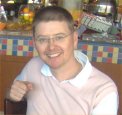
Recently, at the 54th Annual Parapsychological Association in Curitiba, Brazil, the program featured a number of PF recipients. The Arrangements Chair for this excellent event was Fabio Eduardo da Silva, a member of the faculty of the Universidad Dr. Bezerra de Menezes (UNIBEM), the 2006 recipient of the PF’s General Scholarly Incentive Award, and the 2003 recipient of the PF’s Travel Incentive Award. da Silva is also the Director of the Integrated Centre of Experimental Research at UNIBEM, as well a doctoral student at the University of São Paulo (USP) where he studies with Dr. Wellington Zangari, the 2005 recipient of PF’s Frances P. Bolton Fellowship, one of PF’s International Affiliates for Brazil, and a Professor of Social Psychology at USP. da Silva also presented a paper on an exploratory group experience in psi training conducted at the Integrated Centre. The Program Chair Dr. Marios Kittenis, who was an invited observer at Utrecht II: Charting the Future of Parapsychology, a ground-breaking conference organized by the Foundation as well as the Bolton Fellowship recipient in 2009, put together a very interesting and very international conference. (The photo above and to the left is Dr. Wellington Zangari.)

Among the participants were members of Dr. Zangari’s PF Member Organization, “Interpsi,” now located in the Institute of Psychology at the University of São Paulo. PF’s other Brazilian International Affiliate, 2003 D. Scott Rogo Award winner and 2001 Perspective Series Lecturer, Dr. Fátima Regina Machado participated in the conference, as did one of Zangari’s many masters and doctoral students.

Also from Brazil, Dr. Alexander Moreira-Almeida was among the presenters. Moreira-Almeida received a PF Travel Incentive Award in 2006, Angelica and Alexander Moreira-Almeidaand among the activities funded by that award, Moreira-Almeida gave a PF Perspectives Series Lecture on the history of mediumship in Brazil at the Eileen J. Garrett Research Library in Greenport, New York. Now a Professor of Psychiatry at the Federal University of Juiz de Fora, Moreira-Almeida supervises an interdisciplinary group of graduate students and directs the Research Center in Spirituality and Health. (Above at the right is a photo of Dr. Alexander Moreira-Almeida and his wife Dr. Angelica Silva de Almeida at another event a week after the PA Conference in Curitiba.)

From England, two D. Scott Rogo Award Winners, Dr. Chris Roe (1999) and Dr. Simon Sherwood (2006) — now faculty members at the University of Northampton — were very much in evidence on the program. Along with their post-graduate student Glenn Hitchman, they presented a paper on psychological and belief-related variables as predictors of success on a precognitive task. Roe and Hitchman also presented an unsuccessful test of morphic resonance theory using Chinese symbols. Together with his University of Northampton colleague Elizabeth Roxburgh & Simon SherwoodDr. Richard S. Broughton and post-graduate student Sophie Drennan, Roe also gave a research brief on the development of a lability scale. Sherwood presented both a paper reviewing his work on black dog apparitions and a research brief on an upcoming study on the characteristics of people who have, and have not had, an experience of “ghostly phenomena.” Dr. Elizabeth Roxborough, a Northampton faculty member who won the 2006 Charles T. and Judith A. Tart Award, presented a methodological paper on the use of interpretative phenomenology analysis in the study of mental mediumship. She and Roe also presented in a mental mediumship panel organized by Alvarado. (The photo above and to the left is Dr. Elizabeth Roxborough and Dr. Simon Sherwood.)

Dr. Alejandro Parra, who took up the reigns of the Parapsychological Association (PA) Presidency at the convention in Curitiba, is the PF’s International Affiliate for Argentina. His own research output over the years, and that of his group at the Institute for Paranormal Psychology in Buenos Aires, has been prodigious. At this year’s PA he presented both a Carlos Alvarado, Nan Zingrone and Fátima Machadopilot study conducted by himself and a colleague that looked at scores on a free-response ESP test between groups with different levels of hypnotizability, and a research brief on a project to explore the personality traits of psychic claimants. (In the photo to the right eating Brazilian er … uh … Arabic food at a great fast food restaurant called “Habib” a couple of days before the conference is Dr. Carlos Alvarado, Dr. Nan Zingrone and Dr. Fátima Machado.)

The out-going PA President, Dr. David Luke of the University of Greenwich, was also a PF Award recipient, having obtained General Scholarly Incentive Awards in both 2006 and 2009. Not only did Luke preside over the convention in a charming and effective manner but he also organized a very interesting panel discussion on ayahausca and exceptional human experiences. He and one of his students also co-presented an interesting study of dreams, psi and circadian rhythms.

Other luminaries in the field who attended the PA Convention in Curitiba included Dr. Stanley Krippner — a long-time supporter of the PF, one of its first Perspective Lecturers (on psi and dissociation in 1998) and an intrepid psychologist with an incredibly diverse career spanning a wide variety of aspects of psychology and parapsychology — and Dr. Roger Nelson, who lectured on his Carlos Alvarado & Etzel CardeñaGlobal Consciousness Project in the PF Perspectives series of 2003 and who not only presented at update on that project at the conference but commented in the question and answer period on the presentation by Takeshi Shimizu who, with several colleagues in Japan, conducted a very interesting and psychologically-informed study of global consciousness.(Above is a photo of Dr. Carlos Alvarado and Dr. Etzel Cardeña at the PA in Curitiba.)

Among the invited speakers, were Dr. Wellington Zangari, whose presentation focused on anomalistic psychology in Brazil, Alvarado who reviewed distortions in the understanding of parapsychology’s past, and Dr. Etzel Cardeña of Lund University (a Garrett Scholarship recipient while a graduate student in 1985, a contributor to the PF Blog Series as well as an invited speaker at Utrecht II) who discussed altered states of consciousness in some depth.

Among the other papers, addresses and presentations were offerings on hypnotizability and other predictors of Ganzfeld task performance Patric Giesler & Carlos Alvarado(by Cardeña and his student), presentiment (by Julia Mossbridge and her colleagues), a biophysical methodology to investigate the spatial distribution of bio-PK (by Hideyuki Kokubo — an invited observer at Utrecht II and his colleagues), a fascinating study of Lebanese adults who had been the focus of Ian Stevenson’s past-life memory research when they were children (by Erlendur Haraldsson and Majd Abu-Izzedin), and an insightful cross-cultural analysis of ghost hunting groups in the USA and in Germany (Gerhard Mayer). Posters included Marios Kittenis’ study of EEG activity in a face recognition memory task, and Ed Modestino and his colleagues’ analysis of anomalous physiological responses to local and remote emotive stimulation. (The photo above is Dr. Patric Giesler, also a PF grant recipient in his grad student days, and Dr. Carlos Alvarado.)

Upcoming Conferences: Atlantic University’s “Parapsychology and Consciousness” Conference this coming October 14-16th, 2011

If you didn’t have the good luck to attend the 54th Annual Parapsychological Association, may I suggest that Atlantic University’s “Parapsychology and Consciousness” Conference to be held in less than a month in Virginia Beach, Virginia on the eastern seaboard of the United States would be a great substitute. The conference starts VisitorFriday, October 14th at noon with a reception and continues through Sunday evening at 6:15p.m. The conference has an amazing line up put together by Carlos S. Alvarado. It opens with welcomes from Kevin Todeschi, the CEO of both Edgar Cayce’s A.R.E. and Atlantic University, followed by comments from Carlos and I. The first speaker on Friday is Dr. Christine Simmonds-Moore, the 2004 Bolton Fellow, the 2007 Rogo Award Winner, and an invited speaker at the Foundation’s Utrecht II: Charting the Future of Parapsychology. She is also a faculty member at both Atlantic University and the University of West Georgia, as well as a researcher attached to the Rhine Research Center. Simmonds-Moore’s presentation “How do Synesthesias relate to Anomalous Experiences” will cover an online survey of synesthesia experiences and a laboratory experiment in which strong synesthetes were compared with matched controls on an ESP task. Following the coffee break, Dr. Edwin C. May of the Laboratories of Fundamental Research will give an invited address called “Application of Fuzzy Sets to Natural Anomalous Cognition (a.k.a Remote Viewing) Targets.” On Friday evening, Dr. Roger Nelson, an invited observer at Utrecht II, will give the Fall Visiting Scholar Lecture, The Global Consciousness Project. (The photo above is the Visitor’s Center at the A.R.E. where the “Parapyschology and Consciousness” conference will be held.)

A.R.E.On Saturday morning I have the pleasure of introducing Dr. Doug Richards, a long-time Atlantic University faculty member who will give an invited address called “Parapsychology Research at the A.R.E. and Atlantic University.” Following Dr. Richards’ presentation, James Van Auken, a faculty member at both Atlantic University and the Cayce/Reilly School of Massotherapy will moderate a panel called “What a Masters in Parapsychology Should Look Like.” I will give a talk called “Designing a Curriculum for a Masters in Parapsychology.” Following my presentation, three of our faculty members, Carlos, Doug Richards and Christine Simmonds-Moore will give talks on courses they designed for the existing Masters of Transpersonal Studies degree: “Atlantic University’s Principles of Parapsychology Course” (Doug Richards), “History of Parapsychology” (Carlos) and “Psychology of Psychic Experiences” (Christine). The first of the three has been an approved course since the University’s original accreditation in 1994. But as regards the latter two courses, one of the things we will all discuss is how we can serve the field’s educational needs now that our accrediting agency has refused to allow us to offer a masters in parapsychology or even to propose courses that focus specifically on any aspect of the field or its phenomena. It is a dilemma to be sure that might have a happy outcome if we can find a broader way to address the topic. (Above to the right is the A.R.E. Headquarters Building on the hill above the Visitor’s Center. The Offices of Atlantic University are on the second floor.)

Undaunted, however, on Saturday afternoon, we will continue to serve scientific parapsychology in a paper session entitled “Parapsychology and Psychology.” Atlantic University’s Dr Henry Reed will talk about “Intimacy and ESP.” Dr. John Palmer, who has spoken at at least three of the Parapsychology Foundation’s international conferences and who has been at the Rhine Research Center for many years, will tackle a persistence problem for scientific parapsychology. His talk is called “Confront the Source-of-Psi Problem.” Dr. Jim Carpenter, also of the Rhine Research Center and also a past participant in the Foundation’s international conferences, will present his “First Sight” theory. Following Carpenter, Dr. Frank Pasciuti, a clinical psychologist from Charlottesville, Virginia, will examine the relationship of his discipline to parapsychology.

Kevin Todeschi & Nan Zingrone
Saturday evening, Atlantic University will present Dr. Dean Radin, the Senior Scientist at the Institute of Noetic Sciences and author of The Conscious Universe among other important books and articles. Dr. Radin’s lecture is called “Before the Tipping Point: Reconsidering the Nature of Consciousness.” (To the left is Atlantic University and A.R.E. CEO Kevin Todeschi and Dr. Nan Zingrone at an event a year ago in the Main Auditorium of the Visitor’s Center where the “Parapsychology and Consciousness” conference will be held.)

Sunday, October 16th is the last day of the conference and will begin with a paper detailing research that I conducted with Carlos and our colleague from the University of Virginia, Natasha Agee. The research, funded by the Bial Foundation in Portugal, looked into the relationship of psychic experiences, the psychological state/trait of absorption and adult memories of childhood imaginary companions. My talk will be followed by a talk by Loyd Auerbach, who participated in the Foundation’s mediumship conference in 2005 as well as gave a Perspectives Lecture in 2006. Loyd’s talk, “The Haunting of the USS Hornet” will provide an update on an on-going investigation. A panel discussion on the future of the field will follow with presentations by Dr. Robert Van de Castle, a long-time grant recipient of the Parapsychology Foundation who is also on the faculties of the University of Virginia and Atlantic University, Carlos, Dr. Ginette Nachman who has been on the staff and on the Board of the Rhine Research Center in the past, and Dr. Edwin C. May, the physicist who ran the Stargate Program for the Department of Defense for many decades and is the founder of the Laboratories for Fundamental Research. The talks will be “The Mutlifaceted Nature of Psi Dreams: Some Suggestions for the Future” (Van de Castle), “Researching Out-of-Body Experiences” (Alvarado), “Biomedical Aspects of Psi” (Nachman), and “The Future of Psi Research: A Physics Perspective” (May).

CarlosAfter lunch on Sunday, the final session of the conference will include two papers and an invited address. In the papers, David McMillin of the Meridian Institute will present a talk called “Edgar Cayce’s Psychic Process.” This will be followed by Loyd Auerbach’s “The Field Investigators’ Best Tech: Psychics and Mediums as Paranormal Sensing ‘Technology’.” Finally, Dr. Julie Beischel, also a past presenter at a Parapsychology Foundation International Conference and the founder of The Windbridge Institute for Applied Research in Human Potential, will present her invited address, “Modern Mediumship Research: Experiments, Experiences, and Explanations.” (Above Dr. Carlos Alvarado taking a break from planning the conference.)

The conference registration page contains prices for the entire conference ($395 full price, $375 for students and seniors), and for segments of the conference. Dr. Nelson’s Visiting Scholars Lecture and Dr. Radin’s Saturday evening lecture are $30 each, Friday afternoon attendance is priced at $80, and all day Saturday and all day Sunday at $160 each. The conference information page also has click throughs to the hotels, both of which are in the $80-$95 range in October. More information is available on the Atlantic University website. If you download the Media Press Kit you’ll find not only the conference brochure and schedule but also the abstracts booklet. Come and join us! It’s going to be a unique and exciting conference in a wonderful venue!

Final Comments:

I want to thank Lisette Coly for letting me do a conference report on the 54th Annual PA Convention in the Parapsychology Foundation’s blog series and for also Dr. Wellington Zangari and Dr. Carlos Alvaradookaying the advertising of our own Atlantic University conference. I’d also like to say one more thing: if you’re like me and you really want the Parapsychology Foundation to continue doing its good work in the field of parapsychology, I’d urge you to donate. The main website has a donation page that gives some ideas. The Foundation has supported us all these years, it’s time for us to help support the Foundation! (Above Dr. Carlos Alvarado and Dr. Wellington Zangari, on behalf of all of us, say “THANK YOU Parapsychology Foundation!”)


Parapsychology Foundation
PO Box 1562  |  New York, NY, 10021
Phone (212)-628-1550  |  Fax (212)-628-1559

Email info@pflyceum.org with comments or questions.

Copyright © 1999-2004 Parapsychology Foundation. All rights reserved.


www. parapsychology. org